North Dakota released the blackout plate on August 1, 2025, and demand has been strong since the first sets reached counters. The face pairs a deep black field with white characters and keeps the 123 ABC layout of the standard base. A driver can order a passenger pair, a motorcycle plate, or one of the two mobility versions, and each one carries a $25 yearly line.
This page covers the design, the four versions, the yearly charge, the order process, and the delivery window. It covers personalized messages, the renewal cycle, the swap rules for a set already on the road, and the mail path for a driver who cannot reach an office. The figures follow the 2026 NDDOT schedule and the same-day stock shelf at the Bismarck Motor Vehicle office.
How to Get a Blackout Plate in North Dakota
A stock blackout set comes from the Bismarck Motor Vehicle office and from contracted offices around the state. The North Dakota license plate types page covers this topic in more detail. A driver brings the registration card, a photo ID, and payment, and leaves with metal the same day when the pair sits on the shelf. A driver who adds the design at renewal can mark the choice on the notice and skip a second visit. A first registration follows the normal title path, with the plate choice made on the same application.
- Confirm the vehicle class, the plate count, and the character limit.
- Gather the registration card, a photo ID, and payment for the yearly line.
- Pick the blackout face and, for a custom set, the message you want printed.
- Run the message through the personalized search before paying at the window.
- Mount both plates and press the registration sticker onto the rear plate.
- Compare the characters and the state name against the receipt before leaving.
https://www.dot.nd.gov/motor-vehicle/license-plates/blackout-plate
A driver who cannot visit an office should call the Bismarck counter to confirm the mail path and the papers a packet needs. A mailed order takes longer than a counter visit, and a missing signature holds the packet in the queue. A driver who sends a spouse or an agent should add a signed note and a copy of the owner’s ID. Stock differs by version, and a small office may hold only a few pairs, so a call ahead saves a drive across the state. A driver who orders at a small office should ask which versions that office stocks, since a mobility set often arrives by mail from Bismarck.
What the Blackout Plate Is
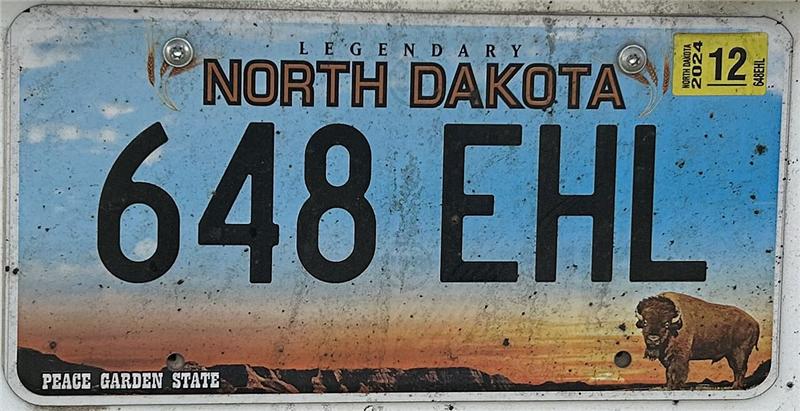
The blackout plate swaps the standard light field for a deep black background with white characters. The state name, the plate number, and the class mark stay white, and the layout keeps the sequence a driver already knows. The state released the design as an option beside the standard base rather than as a replacement for it. A driver who moves from a standard set to a blackout set keeps the same plate number, since the number follows the vehicle record and not the face. A blackout set carries the same legal weight as a standard set, and the rules on mounting, frames, stickers, and covers apply without change.
Tinted Shields and Dark Paint
A driver who hides the face behind a tinted shield faces the same citation as a driver with a light plate. The dark face suits a black truck or a dark sedan, and a light vehicle shows more contrast at the bumper.
Where the Design Came From
The design came from a resident request rather than from a department plan. The legislature approved the option in 2023, and the first sets reached counters two years later. Part of the yearly charge goes to the state highway fund and supports road maintenance across the state, which is why the line stays on the renewal notice instead of closing after the first year. Demand ran ahead of the first stock order, and small offices ran thin during the spring rush. A driver who wants a set for a summer event should call ahead rather than assume the shelf is full. The plate carries no membership tie and no group eligibility, so any registered passenger vehicle in the state can wear one.
A Black Face on the Standard Base
The plate uses flat-printed aluminum with reflective sheeting. Flat printing replaced embossed characters in 2015, and the process gives each letter a clean edge that holds through a North Dakota winter. The sheeting helps a camera and an officer read the plate after dark. A black face shows road salt, dust, and mud faster than a light one, so a driver should wash it more often than a standard set. A scratch or a chip stands out on black, and a plate with a damaged face should be replaced rather than touched up with paint. A driver should not coat the face with wax or a clear spray, since a changed surface can fail a stop. A set that peels or fades after a few winters counts as damaged, and the office swaps it for a fresh print.
Winter Care for a Dark Face
A North Dakota winter is hard on any plate, and a black face shows the damage first. Road salt leaves a gray film that hides the white characters at dusk, and a driver should rinse the plate at a self-serve wash every few weeks. Ice packed behind the bracket can push the plate away from the bumper, and a driver should clear it with a plastic scraper rather than a metal edge. A hairline crack in the reflective sheet spreads with each freeze, and a plate that flakes at the corner should be swapped before the next renewal. A driver who parks outside should check both plates after a plow passes, since a blade can fold a bracket in a single pass.
The Four Versions
Four versions share the blackout look, and each one fits a different vehicle or eligibility class. The passenger set fits a car, a pickup, an SUV, or a van and carries seven characters. The motorcycle plate measures 4 by 7 inches, mounts on the rear fender, and carries six characters. The mobility impaired version needs the same medical certification as the standard mobility plate and shows the wheelchair symbol.
- Passenger: two plates, seven characters.
- Motorcycle: one rear plate, six characters.
- Mobility impaired: two plates, six characters, medical paper required.
- Mobility impaired motorcycle: one rear plate, medical paper required.
The mobility impaired motorcycle version combines the two classes, and it needs both the motorcycle registration and the medical certification. A driver who already holds a mobility placard qualifies for the mobility set without a new review. A passenger set arrives as a matched pair, and the state expects both halves on the car.
Single Plates and Mobility Paperwork
A motorcycle set arrives as a single rear plate, since a bike carries no front plate in North Dakota. A mobility impaired set allows a driver to park in a reserved space, and the plate replaces the dash placard for that purpose. The driver should keep the certification paper in the vehicle for a stop or a parking check.
Blackout Plate Cost
The blackout charge is a yearly add-on to the registration. The license plate fees page covers this topic in more detail. The table lists each version and the personalized lines. The registration fee for the weight class is billed on the same renewal notice and stays outside the figures shown here.
| Item | Amount | Cycle |
|---|---|---|
| Blackout passenger set | $25 | Yearly |
| Blackout motorcycle plate | $25 | Yearly |
| Blackout mobility impaired set | $25 | Yearly |
| Blackout mobility impaired motorcycle | $25 | Yearly |
| Personalized blackout, passenger | $50 | Yearly |
| Personalized blackout, motorcycle | $50 | Yearly |
The personalized line covers the design and the message in one charge. A driver who orders at the counter pays at the time of the order, and the next renewal notice picks up the same line. A driver who adds the design at renewal pays with the registration and avoids a second trip. A set ordered for a vehicle that is still on a temporary registration waits on the title record, and the charge posts when the record clears. A driver who drops the design at renewal returns to the standard set, and the blackout line falls off the next notice. The plate number stays with the vehicle record through the change.
Quotes, Swaps, and Receipts
A clerk can print a quote for the next cycle, and a driver should compare that quote with the renewal notice before paying online. A driver who lets the registration lapse and returns later may see a reinstatement stage before the design line posts. A set that arrives damaged costs nothing to swap when the fault sits with the print, and the office reviews the plate before ordering a new one. A driver should keep the receipt with the registration card, since a charge that posts twice needs both papers to clear.
Personalized Blackout Plates
A personalized blackout set puts a message in place of the standard sequence. The passenger version allows seven characters, and the motorcycle version allows six. Letters A-Z and numbers 0-9 are allowed, and a space counts toward the limit. The request goes on form SFN 53612 and passes a review before production. A driver should count the characters twice, since a string that runs long is returned at the counter.
Choosing a Message
A short message reads better than a crowded one, and a plate that mixes letters and numbers can look like a random string from twenty feet away. A driver should say the message aloud and spell it out the way a deputy would read it. A string that leans on a zero for an O or a one for an I can be misread at a stop, and the officer reads the plate, not the intent behind it. A family name, a short word, or a set of initials tends to hold up better than an inside joke that needs context. A driver should check the string against a phone keypad and a mirror before paying, since a message that reads well on paper can look odd when reversed on the front bumper.
Review and Rejection
The office checks the string against the current plate file and the reserved list. A string that matches an existing plate is denied, and the driver picks another. The review covers letter and number swaps that spell a banned word, so a message that looks clean at a glance can still fail. A request that reads as offensive in any language is rejected before the plate is printed. A driver who plans a gift plate should place the order early, since a rejection adds a round trip and a new form. A clerk can confirm the status of a pending request by phone, and a driver should keep the receipt until the plate arrives.
Blackout Plates on Leased and Company Vehicles
A leased car can wear a blackout set when the lessor approves the change. The license plate designs page covers this topic in more detail. The title stays with the leasing company, and the agent signs the plate request with the registration papers. A driver should read the lease terms before ordering, since some contracts require the car to go back with the factory-standard plates.
Company Trucks and Rental Cars
A company truck follows the fleet policy, and a fleet manager may hold the plate order at a main office instead of a local counter. A driver who leaves the company should expect the plates to stay with the truck, since the registration follows the fleet account. A van converted for personal use after a company sale needs a fresh title and a new plate order, and the blackout face can carry over on a transfer request when the record allows it. A driver who rents a car for a season cannot put a blackout set on it, since a rental carries the owner’s registration and the owner’s plates. A driver who runs a small business with two trucks should keep the designs straight on each record, since a swap on one title does not move to the other.
Delivery and Order Status
A stock blackout passenger or motorcycle set leaves the counter the same day at most offices. A mobility version and a personalized set go into a production queue that takes about 8 to 10 weeks. A driver should keep the receipt and the temporary registration in the vehicle until the metal arrives. A set that arrives with a bent corner or a misprinted character should go back to the office before the sticker goes on.
Queue Times and Trip Planning
The queue slows in the weeks around a new design launch and during the spring renewal peak, so a driver who orders in March may wait longer than a driver who orders in October. A driver who needs plates for a trip should take a stock set and order the custom face on a later cycle. A clerk can confirm the current wait at the counter, and the estimate moves with the print schedule. A driver should not plan a road trip around a delivery date the office cannot promise.
Address Changes and Mail Holds
Mail forwarding runs for a limited time after a move, and a set sent to an old address can sit in a bin for weeks. The office checks an order by the plate number and the VIN rather than a tracking number, so a driver should have both ready before calling. A driver who moves before the set arrives should update the address on the registration and ask the clerk to reprint the mailing label. A plate that never arrives needs a replacement request, and the office may ask for a signed statement before it prints a second set. A driver should photograph the box and the plate before a return, since a claim moves faster with a photo. A driver who plans a winter in another state should order the set before the move rather than after, since a North Dakota plate on a car titled elsewhere creates a mismatch at a stop.
Blackout Renewal and Transfer
The blackout charge renews with the registration on the same 12-month cycle, and the sticker month does not change with the design. A driver can renew online, by mail, at an office, or at a kiosk. The notice lists the registration fee, the blackout charge, and any other plate line on separate rows, and a driver should read each one before paying.
Lost Plates and Address Updates
A charge from an old design can stay on a record after a swap, and a short call clears it. A driver who moves before the set arrives should update the address on the registration, since mail forwarding runs for a limited time. A lost or stolen plate is replaced at an office with the registration card, the plate number, the VIN, and a photo ID, and a stolen set needs a police report first. A driver who trades the vehicle before the set arrives should tell the clerk, since the order ties to the VIN on the title. A transfer to a new vehicle keeps the design and the yearly line, and the unused whole months of registration follow the plate record. A credit stays with the North Dakota registration and does not turn into cash.
What Counts as a Damaged Face
A face with a peeled layer, a faded character, or a crack through the reflective sheet counts as damaged. A driver should bring the plate to an office rather than repaint or cover the flaw, since a touched-up face can fail a stop. A bent corner that cuts a character is a defect even when the plate stays flat on the bumper. A set damaged in a crash should go back with the police report or the insurance paper, and the office prints a replacement with the same number. A driver should keep the old registration card until the new one arrives, and a photo of the mounted plate helps at the counter. A driver who finds a bolt missing after a wash should replace the hardware before the plate wears an oval hole.
Frequently Asked Questions
These are the questions drivers ask most often about the blackout design. Each reply below uses the current NDDOT process and the 2026 fee schedule.
When did the blackout plate go on sale?
The state released the design on August 1, 2025. It sits beside the standard base as an option rather than a replacement. A driver who wants the face on a new registration can pick it during the first title visit, and a driver with an active registration can add it at renewal.
Does a blackout set change my plate number?
No. The number follows the vehicle record, so a swap from a standard set to a blackout face keeps the same string. A driver who pays for a personalized message keeps that message on later renewals and on a transfer to a new vehicle. A lapse in registration can release the string.
Can I get a blackout plate for a motorcycle?
Yes. The motorcycle version measures 4 by 7 inches, mounts on the rear fender, and allows six characters. A rider who needs a mobility plate can order the combined version with the medical certification on file. A bike carries no front plate in North Dakota.
Why does a personalized order take longer?
A stock set comes off the shelf, and a custom set goes through a review and a print queue. The review checks the string against the plate file, and production runs in batches. A driver should plan around the wait rather than book a trip on a date the office cannot promise.
What happens if the design is discontinued?
A set already on a vehicle keeps its registration and its number. A driver who renews after a phase-out returns to the standard base, and a clerk can confirm the status of a design before a driver pays for a new order. A set that stays in service keeps the yearly line until the owner drops the design.