North Dakota puts one standard design on most passenger vehicles, and the current base dates to 2016. The art leans on a bison, a pale sky, and a single script word under the number. A three-digit, three-letter series fills the middle, and a driver who knows the parts can tell a current issue from an older one at a glance. The state name runs across the top in dark capitals.
This page breaks the plate into its pieces: the Legendary base, the symbols that fill it, the ink and sheeting behind the characters, and the series that runs the field. It traces the design history that led to the current look and covers the blackout option beside it, which adds $25 a year, or $50 with a personal message. Every detail follows NDDOT practice for 2026.
How to Order a North Dakota Plate Design
A plate order rides on the registration, so the first stage is a current record for the vehicle. The North Dakota License Plate page covers this topic in more detail. A driver picks the design at a motor vehicle office or through the NDDOT online services portal, confirms the vehicle class, and pays the plate charge with the yearly registration. Staff print a receipt and send the order to the plate vendor. The old metal stays on the car with a valid sticker until the new set arrives by mail.
- Check that the registration is active and the address is right.
- Pick the base: standard Legendary, blackout, or a sponsor design.
- Check that the art comes in the metal size for the vehicle class.
- Pay the plate charge with the registration at the counter or online.
- Mount the new set and move the sticker to the marked corner.
A design change can wait for the renewal month, and the office often mails the new metal before the old sticker expires. A driver who orders outside the renewal cycle pays the plate charge on its own schedule, and the registration month stays the same. A sponsor design takes longer than the standard base, since the state prints that stock in batches. A clerk can confirm which designs the vehicle class allows before the order is filed. A trailer, a motorcycle, and a farm truck each carry a different metal size, and art printed for a passenger car will not fit a bike.
https://www.dot.nd.gov/motor-vehicle/license-plates
The Legendary Base in Detail
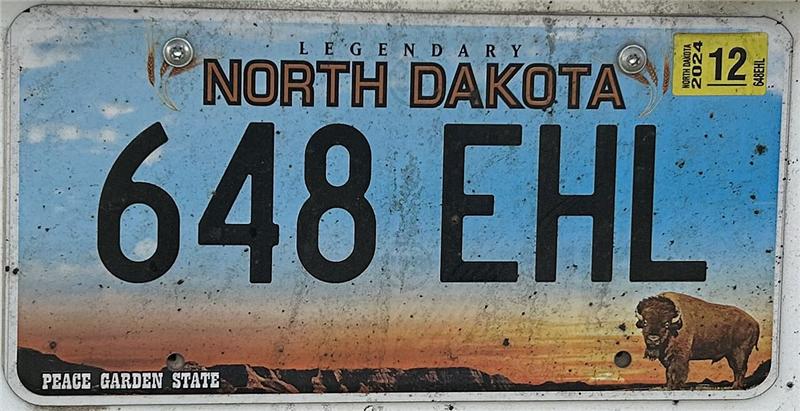
North Dakota retired its plain standard plate in 2016 and replaced it with a full graphic design the state sells as Legendary. The new base traded a printed field for a backdrop with a horizon, so the metal now carries art along with a number. The state name runs across the top in dark capitals. The number fills the middle in a heavy block face. A bison stands low on the field, and the script word sits near the bottom edge. The background shifts from a pale blue at the top to a soft white behind the digits, which gives the characters a clean field to sit on.
What Sits Where on the Plate
The layout follows a fixed order, and each element has a job. The state name tells a reader where the car is registered before the number resolves. The digits and letters carry the identity. The bison and the horizon give the plate a look that a driver recognizes from a distance. The script line works as a caption, so it stays smaller and lighter than the number. The sticker corner sits at the top right on the rear plate, and the front plate stays bare. The design carries no county name and no issue date, which means a driver cannot read the year of the plate from the art. A specialty run keeps the same metal and the same size, then swaps the backdrop for a campus mark, a cause ribbon, or a tribal seal. The proportions matter more than any single element. The number sits high enough that a frame does not clip the bottom of a digit, and the bison sits low enough that a hitch or a bumper ledge rarely hides it. The top band holds the state name in a space a camera can isolate, and the pale center gives the characters a backdrop with no competing line. A driver who looks at the plate from ten feet reads the number before the script word resolves, and that order is deliberate. A design that put the slogan first would slow every read at a toll booth.
Metal, Print, and Mounting
The metal measures 12 inches by 6 inches, the size every state adopted after the 1956 agreement. Four mounting holes sit in the standard pattern, so a dealer frame or a factory bracket fits without drilling. The art is printed flat on reflective sheeting rather than stamped into the metal, which lets the state carry a full-color backdrop at a low cost per plate. A flat face collects fewer chips than an embossed one, and it wipes clean with a wet cloth. A frame may sit on the plate as long as it leaves the state name, the number, and the sticker clear. A bracket that tucks the plate behind a grille or a bumper ledge fails the display rule, and a bent plate can be cited even when the number reads.
Colors and Reflective Sheeting
The standard plate pairs a dark navy character with a light field, and that pairing does most of the work. The specialty plates page covers this topic in more detail. The pale blue at the top fades into a near-white center, so the number lands on the brightest part of the metal. Reflective sheeting bounces headlights and camera flash back toward the reader, which helps a plate camera and a toll reader pull the characters out at night. The state name uses the same dark ink as the number, and the script line uses a lighter weight so it reads as a caption rather than a second number. The palette stays narrow on purpose: a bright backdrop would cut the contrast a reader needs at 50 feet.
Contrast Under Headlights
The blackout plate inverts the scheme, with white characters on a flat black field, and the swap trades the graphic backdrop for a plain surface that suits a dark car. Sponsor designs bring their own colors, from the green of a campus mark to the blue of a conservation plate, and each one keeps the number on a light patch. A driver who tints a cover or sprays a coating on the face breaks that contrast and invites a citation. The sheeting returns light to its source, so the face changes as the angle shifts. A driver parked under a streetlight can watch the plate go bright and then dim as the car rolls. Winter grime cuts the effect faster than summer dust, and a film of road salt turns the pale field gray. The blackout design hides salt on the field and shows it on the white characters, so the two bases fail in opposite ways.
Washing Without Damage
Care keeps the contrast alive. A weekly rinse removes the salt film that turns the pale center gray, and a soft cloth lifts the bug residue that dulls the face after a summer drive. A pressure washer held too close can lift the sheeting at the edge, so keep the nozzle back and use a wide spray. A plate that has lost its gloss along one side should be replaced rather than polished, since the reflective layer sits under the ink and cannot be restored.
The 123 ABC Number Format
Most standard plates carry three digits followed by three letters, printed as 123 ABC. The state issues strings in order, so a low number points to an early run and a high one points to a recent batch. The split gives the state a large pool: 1,000 number blocks times 26 letters in each of three positions, which yields more than 17 million strings before a prefix has to change. The gap between the digits and the letters is part of the layout, and it helps a reader group the string at a glance. The state avoids pairs that blur in the same position, which is why a zero and the letter O rarely sit side by side.
How the Series Advances
Numbers move through the series as registrations are issued, and a new block opens when the current one runs out. A transfer keeps the same string on the next vehicle, and a replacement for a damaged plate usually repeats the number so the record stays intact. Sponsor runs use their own letter blocks, which is why a campus plate and a standard plate can show the same three digits without a conflict. A personalized plate replaces the whole string, and the office checks the message against every active number in the state. A driver who wants to date a plate can compare the string to the current series, since a number far below the current block belongs to an older issue. The three-digit half gives a caller an easy way to say a plate aloud, and a dispatcher rarely mixes up the halves. A driver who renews early keeps the same string, and the state does not reassign a number as long as the registration stays active. A plate that comes back from a body shop with a fresh number has most likely been replaced rather than repaired. A clerk can look up the history of a string in the record, and that lookup answers most questions about a plate that changed hands. A number that belonged to a fleet becomes available to a private owner after the account retires.
The Blackout Design
The blackout plate strips the base down to a dark field with white characters. The antique and collector plates page covers this topic in more detail. It keeps the state name at the top and the number in the center, and it drops the bison, the gradient, and the script line. The plain surface suits a black truck, a dark sedan, or a driver who wants the plate to sit quiet against the bumper. White on black reads as cleanly as dark on white when the sheeting is clean, so the characters stay high-contrast. A personalized version carries a custom message in the same white face. The plate follows the standard mounting pattern, and the sticker goes in the same corner. The finish is a flat print rather than a gloss, so the face does not throw glare back at a camera or a driver behind.
| Plate option | Charge | Cycle |
|---|---|---|
| Standard Legendary base | Included in registration | Yearly |
| Blackout plate | $25 | Yearly |
| Personalized plate | $25 | Yearly |
| Personalized blackout | $50 | Yearly |
| Specialty or organization plate | $10–$25 | Yearly |
| Plate transfer | $5 | Once |
A driver who orders the blackout design keeps the same number when the order moves through the office, and the new metal arrives by mail. The option does not fit every class, so a farm truck or a trailer may stay on the standard base. A dirty black plate hides a character faster than a light one, and a winter of road salt dulls the white face. A weekly wash keeps the contrast intact. A driver who orders during a renewal can keep the same registration month, and the metal usually lands before the old sticker expires. A plate that peels at the edge should be replaced rather than trimmed, since a trimmed plate fails the size rule. A blackout plate on a work truck picks up gravel chips along the bottom, and a coat of wax keeps the white face from staining.
Pairing and Delivery
A driver who wants a matched pair for a truck and a trailer should confirm that both classes offer the design before paying for one. A blackout plate on a leased car should clear the lease terms first, since some lessors restrict a plate change. A plate that arrives with a scratch on the white face is easy to spot, so open the envelope at the counter and look before leaving. A driver who moves should file the address change before the order ships, since the mailer follows the registration record.
Design History Across Decades
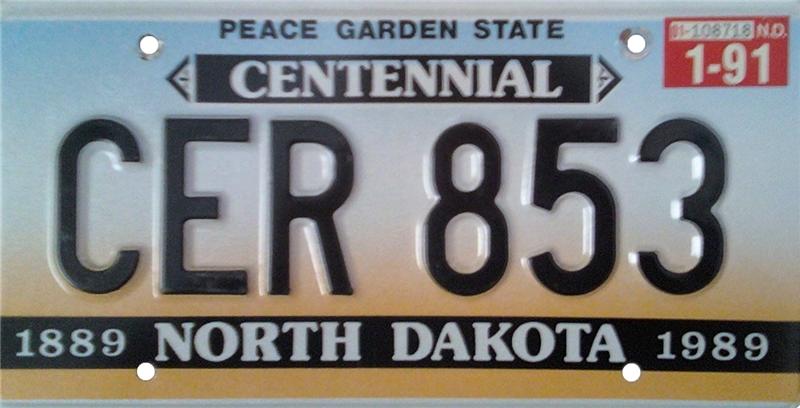
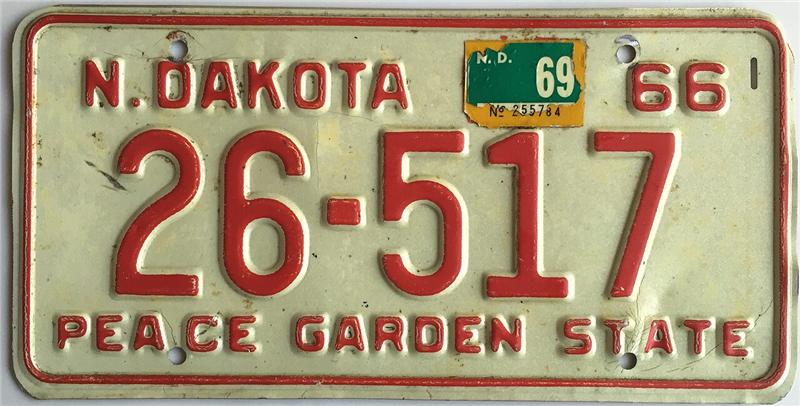
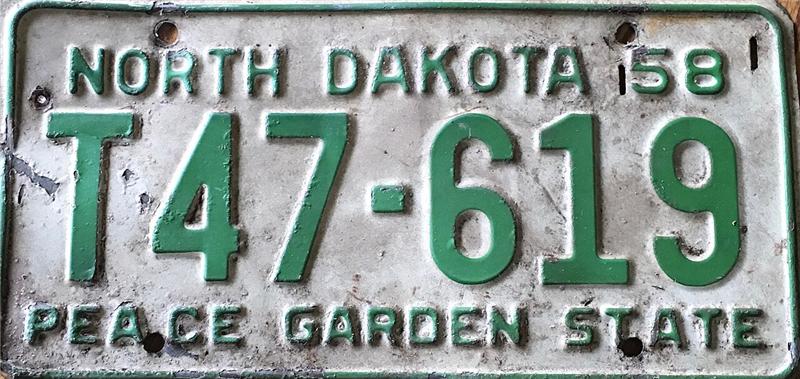
North Dakota plates followed the path most states did. Early metal carried embossed characters on a plain field, with the state name spelled out in block capitals and the year stamped or printed at the edge. The 1956 national agreement fixed the 12-by-6-inch size, and North Dakota adopted it with the rest. Reflective sheeting arrived in the 1980s and replaced plain paint, which made a plate easier to read at night and gave the state a brighter surface to print on. Slogans came and went over the next decades, and each redesign moved the state name, the number, and the tagline into a new arrangement. Flat digital printing replaced stamped art for the base, which allowed a full-color backdrop at a lower cost per set.
Stamped Metal to Digital Print
An embossed plate raises each character above the field, and the ridge catches light along one edge. A flat print lays the whole image on one surface, so the characters rely on ink contrast rather than shadow. The flat method holds fine art, gradients, and small type that a stamp cannot press. It fades in a different way: an embossed plate loses paint from the high points, and a printed plate loses sheeting from the edges inward. A plate that has gone chalky has lost the reflective layer the design depends on, and no amount of polish brings it back. A clean older plate with a readable face still passes a stop, since the state does not force a swap when a new base arrives.
Telling Designs Apart
A parking lot makes a fair classroom. Start with the state name at the top, then check the field behind the number. A current base shows a pale sky that fades to white, a bison low on the metal, and a script word under the digits. A blackout plate shows a flat black field with white characters and no bison. A sponsor plate shows a campus mark, a cause ribbon, or a tribal seal in place of the animal, and the number sits on a light patch inside the art. The sticker corner tells a driver which plate is on the rear, since the front carries none. The series itself is a clue: three digits then three letters points to a standard issue, and a short six-character field points to a motorcycle.
Condition Tells the Age
Condition adds a second layer of information. A plate with a chalky face, a curled corner, or a faded script line has spent years in the sun. A plate with a fresh sticker and dull art may be an older set that a driver kept through a transfer. A plate with a crisp edge and a bright field is either new or well kept. A driver who shops for a used car can read the plate this way and ask about a replacement when the face has worn past a clean read. A plate that cannot be read from 50 feet is a citation waiting to happen, and the state replaces a worn set at the owner’s request.
Frames, Covers, and Clean Lines
A frame can change the read of a plate without changing the art. A wide chrome frame covers the outer margin, and a frame with a dealer name across the bottom hides part of the script line. A tinted cover cuts the light that the sheeting needs to return, and a smoked shield can turn a clear number into a gray smudge at night. A driver who wants a clean look should choose a slim frame that leaves the state name, the number, and the sticker fully visible. A plate hung on one screw and a bent bracket sits crooked, and a crooked plate draws a stop faster than a plain one.
Frequently Asked Questions
These are the questions drivers ask most often about North Dakota plate designs. Each answer follows the current NDDOT issue and the 2026 plate schedule.
What is the Legendary license plate?
It is the standard North Dakota base introduced in 2016. The design pairs a pale sky backdrop with a bison, the state name across the top, and a script word near the bottom. Most passenger cars and pickups carry it when the owner has not ordered a sponsor or blackout design.
Must I replace an older plate with the current design?
No. A plate stays valid as long as the registration is active, and the state does not force a swap when a new base arrives. A driver orders the current art at a renewal, a transfer, or a replacement. A plate with a peeling face should come off the car before the next sticker goes on.
Why does my plate read 123 ABC?
The standard series runs three digits and then three letters, issued in sequence. The pattern gives the state a deep pool of numbers and keeps the string easy to read at distance. A personalized plate replaces the string, and a motorcycle plate uses six characters rather than seven.
Does the blackout design cost more than the standard base?
Yes. The blackout option adds a yearly plate charge on top of the registration, and a personalized blackout adds a second charge. The table on this page lists the 2026 amounts. The standard Legendary base comes with the registration and adds nothing to the yearly total.
Can a specialty design go on a trailer or a motorcycle?
Some designs fit those classes and some do not. A motorcycle takes a smaller plate with a six-character field, and a trailer carries its own series. The office confirms which art matches the metal size before the order goes in. A special order can add a few weeks to the mail, so ask early in the renewal cycle.