
A North Dakota vanity plate puts a chosen word, name, or short phrase on the bumper in place of the state’s assigned series. The department calls the product a personalized plate, and it stamps one for cars, trucks, motorcycles, trailers, and specialty designs. Every text goes through a review before the metal is cut, and the standard passenger field holds seven characters, a motorcycle field six, and most specialty layouts five.
This page covers the definition, the character rules, the 2026 charges, the application form, the review stage, and the wait for the mail. It is written for a driver who wants a request that clears on the first pass, with the details a clerk checks before a plate is stamped. Each figure matches Form SFN 53612, the current state fee sheet, and the eight-to-ten-week stamping and mail window.
How to Get a Vanity Plate in North Dakota
The request begins with Form SFN 53612, the application for a personalized plate. The North Dakota License Plate page covers this topic in more detail. The driver fills in the owner name and address, the vehicle year, make, and identification number, the current plate number, and three ranked choices. A clerk matches the form to the title record, the department reviews the text, and the approved set goes to the stamping queue. A driver can file at a motor vehicle office or send the packet to the address printed on the page. The registration on the vehicle must stay active during the order, since a lapsed record can hold the plate at the counter.
- Print Form SFN 53612 and fill it in with dark ink.
- Write three choices in capital letters, each inside the field for the plate family.
- Check each text on the state plate search and note the date beside the result.
- Attach the registration card number and a photo ID in the owner’s name.
- Sign and date the form, with both owners signing when the title lists two names.
- Pay the yearly plate charge with any registration balance, then keep a copy of the packet.
A driver should print the form and fill it in at a table rather than in line at a counter. Write each choice in capitals, count the characters, and confirm the spaces, since a clerk cannot guess which word was meant. Keep the address on the form identical to the address on the registration, or the notice and the plate can go to an old home. A leased vehicle needs the lessor named on the registration, and a co-owner should sign beside the first name. A driver who files in person should ask for a receipt that shows the three choices, and that slip settles a dispute if a different text arrives. A mailed packet should go by a method with tracking, and a copy belongs in a folder with the dated search results.
https://www.dot.nd.gov/forms/sfn53612.pdf
What the State Calls a Vanity Plate
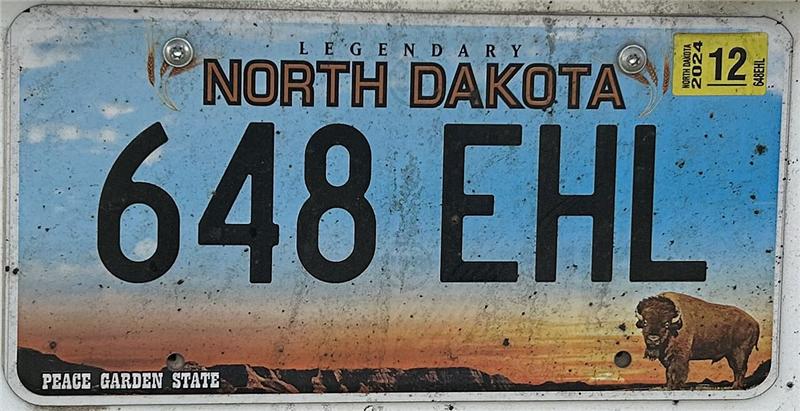
A vanity plate carries text the owner picks in place of the assigned series. North Dakota issues one for a car, a truck, a motorcycle, a trailer, and most specialty designs. The text sits in the normal character field, and the plate keeps the artwork of its family: the standard bison layout, the blackout finish, a college seal, or a military emblem. A vanity plate does not replace registration. The driver still titles the vehicle, insures it, and renews it on the usual cycle, and the personalization line returns with each renewal. A request that repeats the assigned series is not a personalization, and neither is a dealer tag or a temporary permit. A business name on a standard design counts as a personalization, and the state does not print a company logo on a passenger plate.
| A personalized plate | A standard plate |
|---|---|
| Text chosen by the owner | Series assigned by the state |
| Reviewed for meaning before issue | No text review |
| Yearly personalization line on the bill | Registration fee only |
| Three ranked choices on the form | No choices to rank |
| Stamped to order and mailed | Issued from stock at the office |
The product suits a driver who wants a name, a hobby, a short joke, or a team. It does not suit a driver who wants a long phrase, since the field stops at seven characters on a standard set. A specialty design with heavy artwork stops at five, and a motorcycle set stops at six. Each of the three choices goes through the same review, and a driver who wants the same text on a second vehicle files a second request, since the state treats each plate record on its own. A driver who changes a text pays the personalization charge again, and the old text returns to the pool once the record closes. The department does not reserve a text before the form is processed.
Vanity Plate or Specialty Plate
A specialty plate and a vanity plate answer different questions. The specialty design shows a cause, a school, a branch of service, or a tribal nation, and the artwork carries the message. The vanity plate carries the message in the characters. A driver can combine the two on many designs, which puts chosen text on an organization layout with five slots. A driver who wants the artwork alone orders the specialty set with an assigned number and pays only the organization line. Some designs carry an eligibility rule, and a driver must show a service record, a membership card, or a tribal letter before the plate is issued. A driver who wants a logo, a slogan, or a memorial phrase should check whether the design already carries that message, since the review group will not add art to a standard plate.
Character Rules for the Text
North Dakota accepts capital letters A through Z and the numerals 0 through 9. The personalized plate page covers this topic in more detail. A space counts as one character, so the field measures a gap as a slot. Punctuation, symbols, lowercase letters, and accented marks are not part of the series. The standard passenger field holds seven characters, the motorcycle field holds six, and most specialty designs hold five. A trailer uses the seven-character field. The text must not duplicate a plate already on file for the same type. It must not carry an obscene, sexual, violent, or derogatory meaning, and it must not suggest a state agency, a police unit, or an official function. A string that matches an assigned series can be refused, and a text made only of numerals can read as a series.
- Length: seven characters on a standard or blackout plate, six on a motorcycle, five on most specialty designs.
- Spaces: allowed, counted as a character, and matched by the availability search.
- Symbols: none. A dash, a dot, a heart, or a star ends the request.
- Duplicates: no copy of a plate already issued for the same type.
- Meaning: no obscene, hateful, violent, or official-sounding text.
- Readability: no pairing that needs a second look from a driver behind.
- Renewal: the text stays on the plate for as long as the registration stays active.
Space, Symbols, and Mirrors
The state reads a text in capitals, so a word that depends on lowercase for its joke will not land on the plate. A driver should say the text out loud, then read it in a mirror, since a rear plate is seen in reverse by a driver behind. A letter and numeral swap, such as a zero for an O, can turn a clean word into a puzzle. The review group reads the plain meaning, not the driver’s description on the phone. Count the spaces twice, keep a written note of each choice, and run each one through the availability search before the form is signed. A letter placed beside a thin numeral can close the gap and blur the pair, and a full field leaves no margin. A driver who wants a gap at the start or the end of the text should leave it out, since a leading space wastes a slot and a trailing space never shows.
Vanity Plate Charges
The state bills a yearly amount for personalization on top of registration. The table lists the 2026 figures for the main products, and the registration line follows the weight class and the year the vehicle was first registered.
| Item | Amount | Cycle |
|---|---|---|
| Personalized plate, standard | $25 | Yearly |
| Personalized blackout | $50 | Yearly |
| Blackout plate, assigned series | $25 | Yearly |
| Specialty or organization plate | $10–$25 | Yearly |
| Antique personalized | $100 | One-time |
| Collector personalized | $160 | One-time |
| Plate transfer | $5 | Once |
| Registration, passenger car | from $65 | Yearly |
What the Renewal Bill Shows
A standard set carries the lower personalization line, and the blackout version carries the higher one. A specialty design adds the organization charge to the base registration, and the organization sets its own amount inside the state range. Antique and collector personalization takes a single payment, and the plate stays with the vehicle. The personalization line is not a one-time payment on a standard plate. It returns at each renewal, and a driver who drops the text returns to an assigned series. A transfer fee applies when a plate moves to another vehicle, and the remaining whole months become a credit on the new record. A driver who orders a specialty set with chosen text pays the organization line and the personalization line in the same cycle, and the renewal notice shows both. A driver who moves a personalized plate to another vehicle keeps the text when the plate family stays the same, and a change of family starts a new request.
Filling Out Form SFN 53612
Form SFN 53612 is one page, and a clean copy saves a second trip. The vanity plate availability page covers this topic in more detail. The form asks for the owner, the vehicle, the current plate number, and three ranked choices. The sections below walk through each field and the signatures that go with it.
Line by Line on the Form
The form asks for the owner name and mailing address, the vehicle year, make, and identification number, the current plate number, and the plate type. The bottom of the page holds the three choices and the signature line. A clerk reads the form against the title record before the request moves to review, and a mismatch in the identification number holds the packet at the counter. A driver should check that the address matches the registration record, since a notice sent to an old home adds weeks to the wait. The plate type line matters as much as the text, and a driver who marks the wrong type can receive a plate that does not fit the vehicle. A dark pen, plain capitals, and no notes in the margin keep the page clean for the reviewer. A driver who downloads the form should print it at full size, since a shrunk page can cut the signature line at the margin. The page fits on one sheet, and a clerk can read a clean copy without a second look.
The Three Choices
Rank the choices in the order you want them, since the reviewer reads the first line first. A strong list holds one text that fits the field exactly, one close version with a letter or space changed, and one different idea with a different theme. Three spellings of the same word are one idea in three coats, and a theme that draws an objection can take all three down together. Write each choice in capitals, count the characters, and confirm each space. A specialty design shortens the field to five, so a seven-character favorite needs a shorter backup. A motorcycle order needs six characters or fewer. A driver who cannot settle on a third choice should test a name, a hobby, and a place, and pick the two that read cleanest at a distance.
Signatures, Leases, and Co-Owners
The registered owner signs and dates the form. A vehicle with two names on the title needs both signatures, and a missing one sends the packet back. A leased vehicle needs the lessor named on the registration, and the lease agent can confirm who signs for the plate. A driver who buys a car in the same month should finish the title work before filing, since the plate record follows the title record. A company vehicle needs the name of the business and the signature of an authorized agent. A driver who files for a spouse should bring a signed note and a copy of the owner’s photo ID, since a clerk cannot accept a form signed by someone else without the owner’s consent on paper.
How the Review Group Reads a Request
A review group at the department reads each request before a plate is stamped. The group checks the plain reading of the text, the spelling, and the spacing. It compares the text against plates already issued for the same type, and it looks for a meaning that is obscene, sexual, violent, hateful, or tied to illegal drugs. It flags a text that sounds like a state agency, a police unit, a fire department, or an official title. A string that matches an assigned series can fail at this stage even when the public search showed no match. The group does not judge taste in music, sports, or religion, and a team name or a family name usually passes without a question.
Text That Fails Review
A text that reads as a threat, a slur, or a reference to a criminal act fails without a debate. A text copied from a popular out-of-state plate can pass when it does not conflict with a series in use in North Dakota. A brand name can raise a trademark question that the review group does not settle, and a driver who plans one should expect a delay. The three choices are read in order. If the first choice fails, the group moves to the second, then the third. A rejection letter states the reason in general terms, and the office does not hold a rejected text. A driver whose three choices all fail files a new form with new text and a new charge. A text that passes review can still face a recall if a hidden meaning surfaces after issue, so a driver should avoid a joke that depends on a second reading.
Wait Time and the Mailbox
An approved set is stamped to order and mailed, and most orders arrive in about eight to ten weeks. The office cannot print a personalized plate at the counter, since the text goes onto the metal in a separate run. The old plates remain on the car through the wait, and the sticker stays on the rear plate. Fit the new set soon after it arrives, shift the sticker to the new rear plate, and store or destroy the old pair. A set with a wrong character or a defect should return to the office rather than go on the bumper. A passenger order ships as a matched pair, and a motorcycle order ships as a single plate. A set that has not arrived after ten weeks needs a call to the office that processed the order, with the receipt and the three choices at hand.
Keeping the Record Active
The registration must stay current through the whole wait. A driver who lets it lapse can face a new registration before the plate is mounted, and the personalization line may need to be paid again on the new record. A renewal that falls inside the wait goes through the normal channel, and the sticker goes on the current rear plate until the new set arrives. A move during the wait needs an address update, or the set ships to the old home. A driver who sells the vehicle before the set arrives should ask the office how to route the plate to the next record. A driver who leaves the state should close the registration and surrender the old plates before the set ships. A driver who renews by mail should send the renewal and the plate form in separate envelopes, so one delay does not hold the other.
Frequently Asked Questions
These are the questions drivers ask most often about vanity plates in North Dakota. Each answer follows the current state process and the 2026 charge table.
How much does a vanity plate cost in North Dakota?
The cost table on this page lists the 2026 figures. A standard personalized plate carries a yearly personalization line on top of registration, and a personalized blackout carries a higher one. Specialty designs add the organization charge. Antique and collector personalization is billed once. The charge returns at each renewal, and the registration line follows the weight class of the vehicle.
How many characters can a vanity plate have?
Seven characters on a standard passenger car or truck, six on a motorcycle, and five on most specialty layouts. A space counts as a character. Punctuation and symbols are not allowed. A text that runs past the field is trimmed or rejected at the counter, so count the characters in capitals before signing and keep all three choices inside the limit.
Can I use spaces or symbols on a North Dakota vanity plate?
A space is allowed and counts as one character. Symbols are not part of the series, so a dash, a dot, a heart, or a star ends the request. Lowercase letters are not used on the plate, and the state reads every text in capitals. A driver who wants a gap between words should include it in all three choices and in the availability search.
What happens if my first choice is rejected?
The review group moves to the second choice on the form, then the third. A rejection letter states the reason in general terms. A driver whose three choices all fail files a new form with new text and a new charge. A rejected text is not held, so another driver can request it later. A clean backup list keeps the order from starting over.
How long does a North Dakota vanity plate take to arrive?
About eight to ten weeks after the review clears. The set is stamped to order and mailed, and the office cannot hand it over at the counter. The current plates stay on the car during the wait. Update the address on the registration if you move, and call the office after ten weeks if the mail has not brought the set.